What Is GPS?
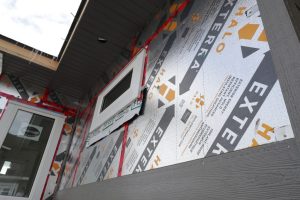
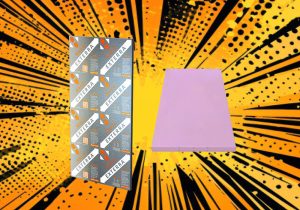
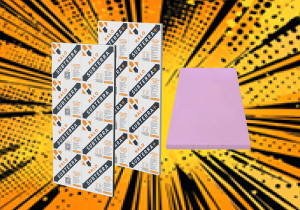
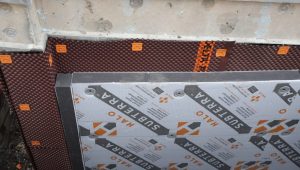
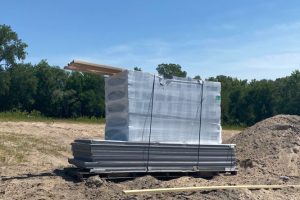
Graphite Polystyrene (GPS) is a type of polystyrene foam insulation and is the insulation material that forms the core of Halo’s Interra®, Exterra®, and Subterra® panels.
GPS is basically Expanded Polystyrene (EPS) which is infused with graphite particles.
These graphite particles reflect radiant heat as it moves through the insulation, thus slowing down heat transfer considerably.
Thanks to the graphite content, GPS rigid insulation provides a more effective thermal break than EPS alone would offer.
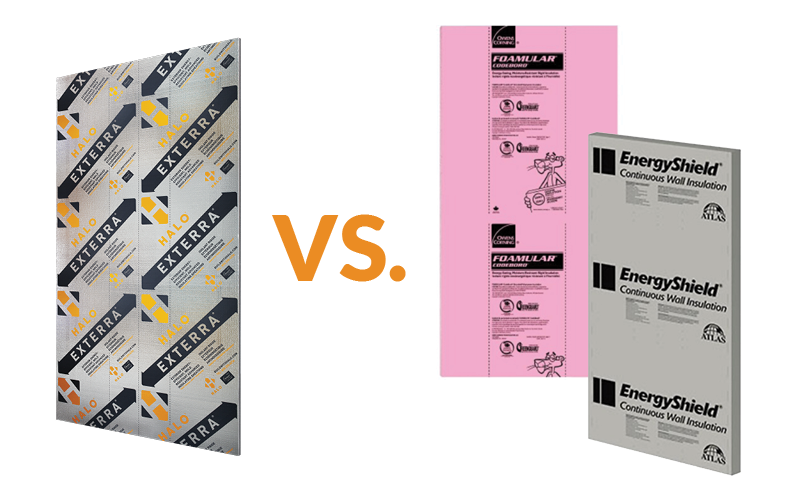
GPS vs. XPS and Poly ISO: Long Term Thermal Resistance
GPS insulation provides a stable Long-Term Thermal Resistance (LTTR) of roughly R-5 per 1.06 inch of foam board, which is roughly on par with Polyisocyanurate’s (Poly ISO) thermal resistance and 5% more than Extruded Polystyrene (XPS).
GPS has its stable LLTR because it’s manufactured using air as the blowing agent. This means that the foam beads actually comprise air, and as such, are not vulnerable to “thermal drift.”
Thermal drift is a process that causes foam insulation with captive gasses to lose some of its thermal resistance as air replaces these captive gasses inside the foam over time. With GPS, thermal drift is not an issue because the foam traps air, not blowing agents.
In contrast, XPS is produced with blowing agents — gasses that fill up the cells of the foam. Over time, these gasses leak out into the atmosphere and get replaced by air at lower pressure, thus reducing the thermal resistance of the insulation. In the field, this thermal drift becomes an issue, as XPS loses its thermal resistance and the walls, roofs, and foundations it protects allow more heat to escape as time goes by.
On paper, Poly ISO has an impressive thermal resistance of R-6.5 per inch. That said, according to research performed by the Building Science Corporation, Poly ISO’s field performance falls short of its advertised thermal resistance.
In warm climates, Poly ISO’s R-Values fall to about R-5.6 — a 14% drop.
In cold climates — where R-Values matter most — Poly ISO’s thermal resistance plummets by 23% to R-5. So, in cold climates, Poly ISO has a similar R-Value as GPS; of course, you’re likely paying more for Poly ISO because you’re expecting R-6.5, not R-5.
GPS vs. XPS: Water Absorption
XPS has a slightly lower water absorption rate than GPS — a statistic that’s erroneously used to discredit GPS and spec XPS instead. Here’s why this marginally higher water absorption rate doesn’t matter much.
The test that’s used to measure water absorption is designed as a quality control mechanism; it’s not designed to simulate real-world conditions. The test requires the foam board to be immersed in water for a period of 1-5 days, and the absorption is measured immediately after the prolonged immersion.
Of course, in the real world, no insulation product would be expected to be immersed in water for this long (or at all). In fact, if your wall’s insulation is completely immersed in water, you’ve got bigger issues than thermal resistance — there’s a flood.
Also, note that even short-term exposure to water should be eliminated if the builders follow basic building science principles and include a capillary break in front of the insulation.
And despite the severity of test conditions, both XPS and GPS absorb very little water during the procedure. GPS has a water absorption rate of 1.1%, whereas XPS has a rate of 0.7%: a difference of 0.4%.
GPS vs. XPS and Poly ISO: Environmental Impact
The environmental impact of insulation products can be measured using two key metrics: water consumption and Global Warming Potential (GWP). Below, we’ll see how GPS, XPS, and Poly ISO score across these two metrics.
Freshwater Consumption During Manufacturing
GPS requires far less water to be manufactured than either XPS and Poly ISO. Here’s how much freshwater is needed to produce a single 4×8 sheet of all three products:
- GPS: 0.00649 — 0.00831m3
- XPS: 0.0115 — 0.38m3
- Poly ISO: 0.16m3
As you can see, it takes anywhere between 2 and 46 times more water to produce a single sheet of XPS than GPS.
At the same time, Poly ISO requires 20 times more freshwater than GPS to be manufactured.
Global Warming Potential
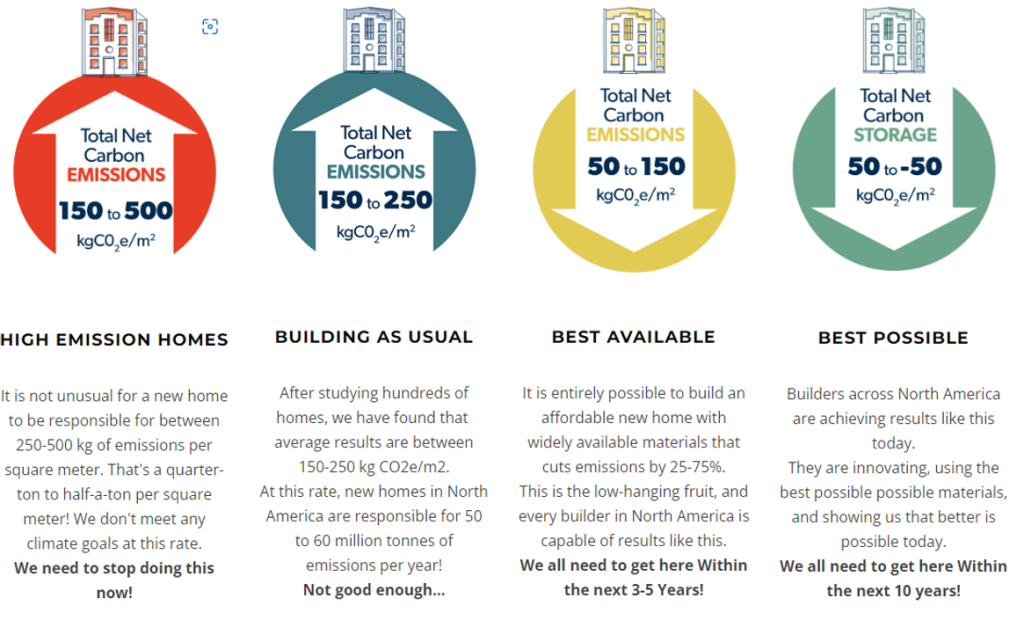
Global Warming Potential (GWP) is measured in kilograms of CO2 emissions per square meter of the insulation product. Using this metric, GPS has far less GWP than both XPS and Poly ISO. The GWP of each product is listed below:
- GPS: 1.87 kg CO2-eq.
- XPS: 5.39 – 41.09 kg CO2-eq.
- Polyiso: 2.32 kg CO2-eq.
The statistics above show us that manufacturing GPS produces roughly 20% less CO2 emissions than Poly ISO.
Meanwhile, producing XPS emits anywhere between 2.9 to 21 times more CO2 than GPS.

Don't miss a thing!
Subscribe for exclusive content, insider industry news and limited edition webcasts.
Wrapping It Up
In the article above, we’ve compared GPS, Poly ISO, and XPS side-by-side on the products’ performance in Long-Term Thermal Resistance, water absorption, and environmental impact.
And, as you can see, GPS has superior long-term thermal resistance and a much lower carbon footprint than its XPS and Polyiso counterparts.
And while GPS has a slightly higher water absorption rate than XPS, the water absorption is still quite minimal and definitely nothing to worry about under field conditions given an adequate capillary break.
Halo Exterra Is Now WUFI Listed—Here’s Why That Matters
At A Glance What WUFI hygrothermal analysis is—and why it matters How Halo Exterra supports moisture and thermal performance Why WUFI modeling is a major
GPS vs XPS: Smarter Insulation for Light Commercial Projects
At A Glance GPS insulation can be a more cost-effective alternative to XPS while delivering comparable or better performance. GPS maintains long-term R-value stability, helping
GPS Insulation vs XPS: Why Subterra Plus Wins
At A Glance Subterra and Subterra Plus are GPS under-slab insulation solutions, with Plus featuring a tougher laminate and radon barrier performance. GPS maintains thermal